Quick answer: Yes, many powered aircraft can physically taxi backwards, but commercial airliners rarely do so under their own engine power. Turboprop aircraft and select jet aircraft equipped with thrust reversers can redirect propulsion forces forward to move backward—a maneuver called a powerback. However, standard airport operations prohibit or heavily restrict self-propelled reverse taxiing due to severe safety risks. Using high engine power near terminal gates can blow pavement debris into engine intakes, create jet-blast hazards, exceed ramp noise restrictions, or tip the airplane onto its tail if brakes are applied suddenly. Consequently, airports rely on ground pushback tugs for reverse movement.
Ground Movement Dynamics: Powerbacks versus Pushback Tugs
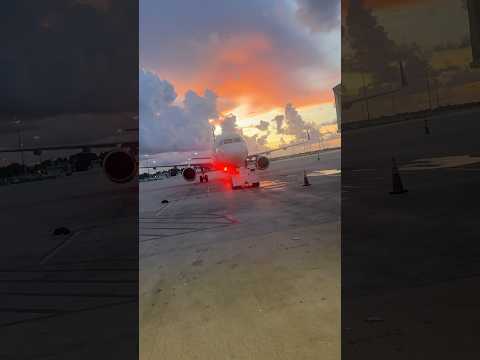
During routine airport operations, commercial airliners leave their gates using dedicated ground support vehicles known as pushback tugs. These heavy tractors attach to the aircraft's nose landing gear—either through a mechanical towbar or by clamping and lifting the nose wheel directly—to push the aircraft backward onto the taxiway while the engines remain at idle or prior to engine start.
However, many aircraft possess the engineering capability to move backward using their own engines. This procedure, known in aviation as a "powerback," relies on reversing the direction of generated thrust:
* **Turboprop Aircraft:** On turboprop airplanes (such as the Bombardier Dash 8, ATR 72, or Lockheed C-130), powerback capability is built into the propeller control system. Pilots move the power levers into "beta mode," adjusting the propeller blade pitch to negative angles so the spinning blades push air forward rather than backward. * **Jet Aircraft:** On jet airliners, powerback relies on thrust reversers. Thrust reverser systems deploy mechanical doors, target buckets, or cascade vanes behind or within the engine nacelle to deflect bypass air and jet exhaust forward, creating a backward force on the airframe.
Aircraft Type and Configuration Exceptions
Engine location, ground clearance, and airframe aerodynamics dictate whether an aircraft model can perform a reverse taxi maneuver:
* **Tail-Mounted Jet Engines:** Historically, aircraft equipped with fuselage-mounted or tail-mounted engines—such as the Douglas DC-9, Boeing 727, and McDonnell Douglas MD-80—frequently conducted approved powerbacks at designated airport gates. Because tail-mounted engines sit high above the tarmac, they are significantly less likely to draw in ground debris. * **Wing-Mounted Jet Engines:** Modern turbofan aircraft featuring low wing-mounted engines (such as the Boeing 737 and Airbus A320 families) have low engine nacelle ground clearance. Applying reverse thrust at zero or low forward speeds creates a powerful suction vortex in front of the engine intake, drawing in loose pavement, rocks, and ramp trash. As a result, airline procedures and airport regulations strictly prohibit powerback maneuvers for wing-mounted jet airliners.
Operational Hazards and Safety Risks
While thrust reversers are essential for decelerating aircraft on slippery or short runways during landing rolls, using engine reverse power on airport ramps presents critical engineering and operational dangers:
1. **Foreign Object Damage (FOD) and Recirculation:** High-velocity exhaust directed forward churns up ramp debris, sand, or snow. The engines can then ingest these objects, causing severe mechanical damage to turbine blades or inducing compressor stalls. In the official accident investigation of Air Florida Flight 90 (N62AF), NTSB findings documented that the flight crew operated engine thrust reversers at the gate for 30 to 90 seconds in heavy snow—contrary to company policy—blowing substantial amounts of snow and ice around the airframe and engines prior to departure [Source 1]. 2. **Tail-Tipping and Center of Gravity Dynamics:** The main landing gear of a transport category aircraft acts as a fulcrum positioned just behind the airplane's center of gravity. When an aircraft is rolling backward, applying the main wheel brakes creates a strong pitch-up moment. Abrupt braking during a reverse taxi can cause the nose gear to lift off the ground, tipping the tail cone directly onto the tarmac. 3. **Blind Spots and Ground Personnel Hazards:** Cockpits offer no direct visibility behind or underneath the airframe. Performing a reverse taxi requires multiple wing walkers and ground spotters to maintain visual or radio contact. Additionally, high-velocity forward exhaust near passenger terminals creates severe jet-blast hazards, risking injury to ramp workers or damage to ground support equipment. 4. **System Limitations and Interlocks:** Thrust reverser deployment systems are engineered primarily for landing deceleration. As seen in safety records like FAA incident report C-FPWC, thrust reverser stow/deploy cycles rely on complex hydraulic pressure interlocks and weight-on-wheels logic (squat switches) that can present flight safety risks if mechanical sequences are interrupted during low-speed ground maneuvers or go-around transitions [Source 2, Source 3].